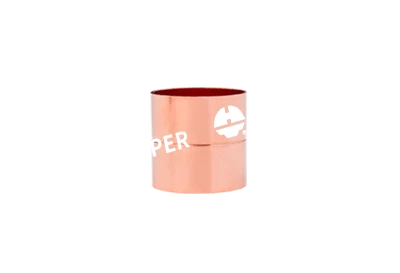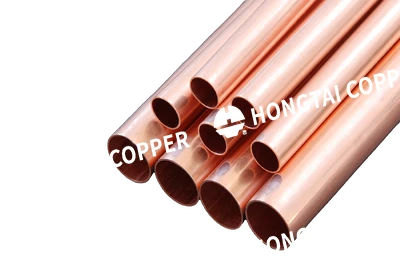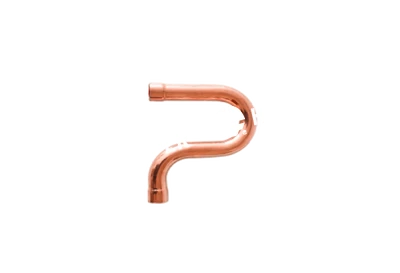

On large projects — hospitals, factories, labs, and campuses — installation time is the biggest cost driver. A well-designed copper gas pipe line reduces labor hours through faster joining, standardized sizing, cleaner routing, and fewer rework events. This guide connects those efficiency gains to copper pipe for oxygen applications, where cleanliness and documentation — managed correctly — protect the schedule rather than extend it.
| Category | Applications | Key Additional Steps |
|---|---|---|
| Fuel gas distribution | Natural gas, LPG, lab fuel lines | Pressure testing, leak detection, code-compliant joining |
| Oxygen and medical gas | Hospital O2, lab oxygen, industrial gas | Cleanliness protocol, purging, certification documentation |
Fuel gas follows standard mechanical codes. Oxygen and medical gas adds cleanliness requirements, nitrogen purging, specialized labeling, and third-party verification in many jurisdictions.
When these additional steps are planned into the workflow from the start, they add predictable time — not reactive delays. The rework cost of skipping them far exceeds the time spent doing them correctly.
| Joining Method | Hot Work | Speed | Best For |
|---|---|---|---|
| Press-fit (mechanical) | No | Fast | Where codes permit; scheduling advantage |
| Brazing | Yes | Moderate | Oxygen lines; high-pressure applications |
| Soldering | Yes | Moderate | Lower-pressure fuel gas where permitted |
Press-fit systems eliminate fire watch personnel, hot work permits, and the scheduling delays that come with them. On a large project with hundreds of joints, removing hot work from even a portion of the installation represents significant labor saving.
Pre-cut lengths reduce onsite cutting and deburring time
Standardized fitting list reduces procurement errors and wrong-material installations
Consistent support spacing defined in shop drawings reduces field decision-making
Deburring tools staged at work zones prevent the most common cause of joint failure
| Control | What It Prevents | When Required |
|---|---|---|
| Oil-free handling and storage | Hydrocarbon contamination | All oxygen pipe and fittings |
| Capped ends throughout | Dust, moisture, and particulate ingress | Warehouse to final connection |
| Nitrogen purging after installation | Moisture and atmospheric residue | All medical and industrial O2 lines |
| Documented pressure testing | Joint integrity confirmation | Before any gas supply activation |
Ordering pre-cleaned, pre-capped copper pipe for oxygen shifts the cleaning burden from jobsite to factory. Pipe that arrives clean and documented allows installation to proceed without onsite degreasing — on a large project this is meaningful labor reduction and eliminates a common quality escape.
Large installations contain repeating assembly patterns — the same riser configuration, the same branch detail, the same zone valve assembly appearing dozens or hundreds of times. Prefabrication exploits this repetition.
| Prefabrication Element | Labor Saved | Quality Benefit |
|---|---|---|
| Pre-assembled riser spools | Eliminates multi-trade coordination at shaft | Controlled environment joint quality |
| Standardized branch assemblies | Reduces field measurement at every branch | Fewer dimensional errors |
| Pre-labeled pipe sections | Eliminates onsite labeling step | Correct identification from installation |
| Pre-tested sub-assemblies | Reduces commissioning snag list | Failures found before installation |
BIM coordination and detailed shop drawings produced before any pipe is cut identify clashes early, define support locations in advance, and allow prefabrication to be dimensionally accurate — reducing change orders and inspector holds.
| Field | Options | Notes |
|---|---|---|
| Pipe standard | EN 1057, ASTM B88, or project-specified | Confirm with project specification |
| Temper | Straight (hard drawn) or coil | Large installations use straight lengths |
| Cleanliness level | Standard or pre-cleaned for oxygen service | Specify with documentation for O2 |
| End caps | Plastic caps on all cut ends | Confirm present on delivery |
| Fitting compatibility | Press-fit, solder, or braze from approved supplier | Single-source to prevent dimensional mismatch |
| Traceability marking | Heat number, batch, OD/wall | Required for documentation packages |
Mill test certificate confirming chemistry and mechanical properties
Cleanliness statement or test report for oxygen service
Pressure rating confirmation for specified OD and wall thickness
Install a trial section using the specified pipe, fittings, and joining method. Complete a pressure test, confirm fit-up tolerances, and identify any adjustments before the bulk order is placed.
Cutting labor cost is about designing a system that installs smoothly — fewer hot-work delays, fewer errors, repeatable workflows from first floor to last. A modern copper gas pipe line approach, paired with the right controls for copper pipe for oxygen applications, shortens schedules while meeting the quality and documentation standards large projects require.
Q1: How does a copper gas pipe line reduce labor costs on large projects?
Standardized components, press-fit joining options where codes allow, prefabricated assemblies, and BIM-coordinated shop drawings all reduce onsite labor. Eliminating hot work permits and fire watch requirements through press-fit joining is often the single largest scheduling advantage on large sites.
Q2: Is copper pipe for oxygen different from standard copper gas pipe?
Yes. Oxygen and medical gas applications require oil-free handling, capped storage, nitrogen purging after installation, and documented pressure testing. Pre-cleaned, pre-capped pipe ordered specifically for oxygen service reduces onsite preparation and eliminates a common contamination risk.
Q3: What joining methods are used for copper gas pipe line installations?
Brazing is required for oxygen and high-pressure applications. Soldering suits lower-pressure fuel gas where codes permit. Press-fit mechanical joining eliminates hot work requirements where codes allow — significantly reducing scheduling complexity on large sites.
Q4: What causes the most rework on copper gas projects?
Poor joint quality, contamination on oxygen lines from oil or particulate, routing clashes found during installation rather than in BIM coordination, and incomplete pressure testing documentation that delays commissioning sign-off.
Q5: What should I confirm before bulk ordering copper pipe for oxygen?
Pipe grade, OD and wall thickness, cleanliness level and supporting documentation, end cap specification, fitting compatibility, mill test certificates, and packaging integrity for transit to site.