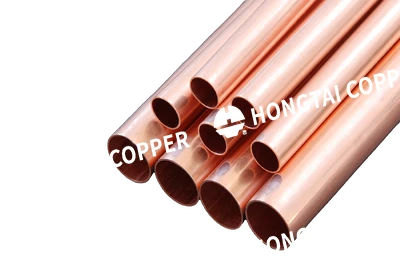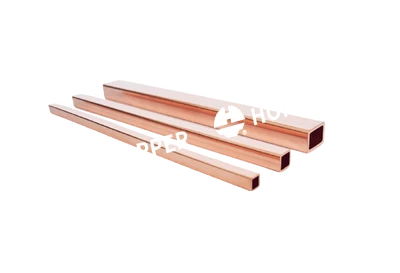

Selecting the right copper pipe types is a pressure-and-application decision — the wrong wall thickness leads to higher failure risk, unnecessary cost, or compliance issues. Whether you are specifying tube for plumbing, HVAC, refrigeration, or industrial gas lines, understanding how wall thickness links to working pressure, temperature, and joining method is essential. This guide also covers what to confirm with copper pipe wholesale suppliers so your project receives consistent, certifiable tube quality.
Pressure capability in a copper tube is determined primarily by wall thickness, outside diameter, and operating temperature — not just copper grade alone.
| Wall Thickness | Pressure Capability | Cost and Weight | Typical Use |
|---|---|---|---|
| Thin | Lower — suitable for low-pressure systems | Lower | Domestic cold water, low-pressure HVAC |
| Medium | Moderate — covers most plumbing and HVAC | Standard | General plumbing, heating, refrigeration |
| Thick | Higher — suitable for gas, high-pressure systems | Higher | Industrial gas, medical gas, high-pressure process |
As temperature increases, the allowable working pressure for any copper tube decreases. A tube that is correctly rated at 20°C may be significantly derated at 100°C. This temperature derating is one of the most commonly overlooked factors in copper tube specification.
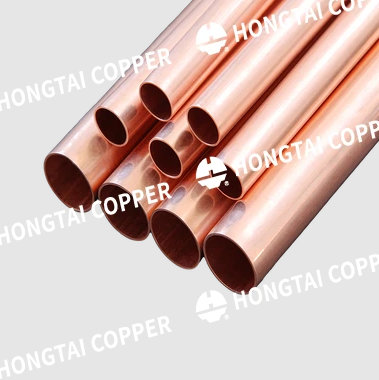
Pressure rating tables showing allowable pressure by OD, wall thickness, and temperature
Temperature derating data for the specific alloy and temper supplied
Confirmation of the applicable standard (EN 1057, ASTM B88, AS 1432, or project-specified)
Test documentation confirming dimensional and mechanical compliance
| Tube Category | Typical Wall | Key Characteristic | Common Applications |
|---|---|---|---|
| Plumbing tube (Type K / L / M or EN equivalent) | K = thickest; M = thinnest | Standardized OD with varying wall by type | Domestic water, hydronic heating, commercial plumbing |
| ACR / refrigeration tube | Medium, cleaned and dehydrated | Supplied capped; clean bore for refrigerant service | HVAC line sets, refrigeration circuits, heat pumps |
| Medical and industrial gas tube | Medium to thick, strict cleanliness | Pre-cleaned, capped, documented | Hospital piped gas, laboratory gas, industrial O2/N2 |
| Industrial process tube | Varies by design pressure | Heavy wall available; custom OD and wall | Compressed gas, hydraulic circuits, process piping |
Domestic cold and hot water: standard plumbing tube to local code — EN 1057 R250 or ASTM B88 Type L in most markets
Hydronic heating: confirm temperature rating; medium wall typically adequate
HVAC and refrigeration: ACR tube — cleaned, dehydrated, capped — do not substitute standard plumbing tube
Medical and industrial gas: pre-cleaned tube with mill test certificate and cleanliness documentation
High-pressure compressed gas or process lines: confirm design pressure against wall thickness pressure table; heavy wall may be required
| Parameter | What to Define | Why It Matters |
|---|---|---|
| Design pressure | Maximum working pressure plus surge allowance | Determines minimum wall thickness from pressure table |
| Operating temperature | Maximum sustained temperature in service | Drives temperature derating of allowable pressure |
| Vibration and fatigue | Is the installation subject to mechanical vibration? | Affects temper selection and support spacing |
| Environment | Indoor, outdoor, buried, corrosive atmosphere | Determines whether additional protection is required |
| Joining method | Solder, braze, press-fit, or compression | Affects minimum wall thickness for acceptable joint |
Wrong temper selection: hard drawn tube is used for straight lengths in most plumbing; soft annealed is used for coils and bending — substituting one for the other causes handling and installation problems
Using plumbing tube for ACR service: standard plumbing tube is not cleaned or capped and introduces contamination risk in refrigerant circuits
Sizing from nominal pipe size without confirming OD and wall to the actual standard being used — OD conventions differ between EN, ASTM, and other standards
| Quality Factor | What to Check | Why It Matters |
|---|---|---|
| OD tolerance | Confirm to standard tolerance band | Oversized or undersized OD causes press-fit and solder joint failures |
| Wall thickness tolerance | Confirm minimum wall is maintained across the tube length | Thin spots reduce actual pressure capability below the rated value |
| Surface condition | Smooth external surface; clean internal bore | Surface defects initiate cracks; contaminated bore damages refrigerant circuits |
| Temper consistency | Hardness and bendability consistent along length | Inconsistent temper causes handling problems and joint quality variation |
| End caps | Plastic caps on all tube ends | Prevents ingress of moisture, dust, and particulate in transit and storage |
Mill test certificate (MTC) confirming chemical composition and mechanical properties per the applicable standard
Dimensional inspection report confirming OD, wall thickness, and length tolerances
Cleanliness statement or test report for ACR, medical gas, or oxygen service tube
Standard compliance marking on tube or bundle labeling
Anti-dent packaging for straight lengths — foam or cardboard interleaving prevents surface damage in transit
Bundle wrapping that protects from moisture for ocean freight
Coil packaging that maintains roundness and prevents kinking
| Field | Example | Notes |
|---|---|---|
| Outside diameter (OD) | 28 mm or 1-1/8 inch | Specify in the dimension system of your applicable standard |
| Wall thickness | 1.5 mm | Or specify tube type (K/L/M) if using ASTM B88 |
| Temper | Hard / Half hard / Soft | Confirm for your joining method and application |
| Length | 5 m straight lengths or 15 m coils | Confirm what your site logistics and storage can handle |
| Standard | EN 1057, ASTM B88, AS 1432, or other | Must match your project specification and local code |
| Application | Plumbing, HVAC, ACR, medical gas | Determines cleanliness and documentation requirements |
| Quantity | Metres or pieces per size | Include all sizes in one inquiry for complete pricing |
| Delivery | Required date and destination port | Affects lead time feasibility and freight planning |
Request samples in each size before placing a full bulk order — confirm OD, wall, temper, and surface quality against your specification
Specify a pre-shipment inspection for large orders — dimensional and visual checks before the container is sealed
Confirm lead times by size and temper — soft annealed coils and heavy wall tube may have longer production lead times than standard straight lengths
For ACR and medical gas applications, confirm that the supplier has production capability for cleaned and capped tube — not all copper tube manufacturers offer this as standard
The right copper pipe types for your project depend on verified pressure requirements, operating temperature, and the correct standard for your application. Base every specification decision on code-approved pressure tables and confirmed manufacturing tolerances — not assumptions. Partnering with experienced copper pipe wholesale suppliers who provide full documentation, consistent dimensional quality, and application-appropriate tube categories is what ensures the product you receive matches the performance your system demands.
Q1: Why is wall thickness so important when selecting copper pipe types?
Wall thickness is the primary variable controlling working pressure capability for a given tube OD. A thinner wall reduces the allowable pressure — and as operating temperature increases, the allowable pressure decreases further. Selecting the wrong wall thickness for the design pressure and temperature is the most common specification error in copper tube procurement.
Q2: Which copper pipe type is best for high-pressure applications?
Thicker-wall tube (Type K in ASTM markets, or the equivalent heavy-wall option in EN 1057 markets) provides the highest pressure capability at a given OD. The specific choice depends on your design pressure, operating temperature, OD, local code, and joining method. Always verify against the pressure rating table for the applicable standard rather than assuming.
Q3: How do I confirm pressure ratings with copper pipe wholesale suppliers?
Request the pressure rating table for the specific OD, wall thickness, and temper combination you are ordering, along with temperature derating data and the applicable standard. A supplier who cannot provide this information should not be supplying pressure-system tube.
Q4: Is ACR copper tube different from plumbing copper tube?
Yes. ACR tube is cleaned, dehydrated, and supplied with caps on both ends to maintain bore cleanliness for refrigerant service. Standard plumbing tube is not cleaned or capped to this standard. Using plumbing tube in an ACR application introduces contamination that damages compressors and reduces system life.
Q5: What details should I provide to get an accurate quote from copper pipe wholesale suppliers?
Outside diameter, wall thickness or tube type designation, temper, length, applicable standard, application (plumbing, HVAC, ACR, medical gas, or industrial), quantity by size, and required delivery date and destination. A complete specification eliminates the most common causes of quote delay and incorrect product supply.