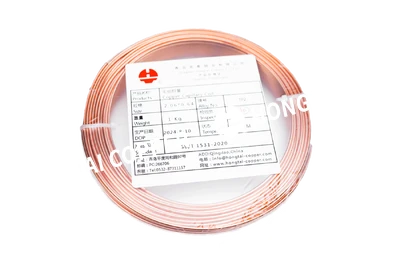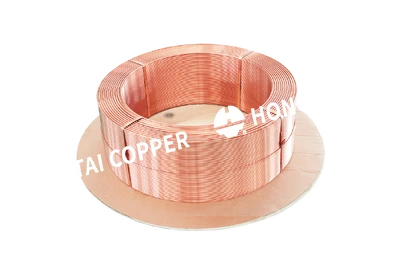

Copper plays a critical role in refrigeration systems, owing to its excellent thermal conductivity, durability, and versatility. It has been a preferred material for decades in both residential and commercial air conditioning systems. Whether you are exploring copper pipe types for your next project or seeking reliable copper tube suppliers for your business, understanding the benefits and applications of copper tubing for propane, copper pipe for ac unit, and refrigeration copper tubing is essential. This article explores the various aspects of copper usage in refrigeration, offering insights into material choices, design considerations, and common troubleshooting scenarios.
Evaporators are a key component in refrigeration systems, where copper tubes are extensively utilized due to their thermal efficiency and ease of maintenance. Copper tubes facilitate the heat exchange process crucial to system performance. For instance, 15mm copper pipe is often used in evaporator coils because of its ability to handle significant fluid pressure and its compact size, a specification reliably met by HONGTAI COPPER products.
Property | Advantages in Evaporators |
Thermal Conductivity | Copper's high thermal conductivity enables efficient heat transfer. |
Ease of Installation | Lightweight and easy to manipulate into complex shapes compared to other materials. |
Durability | Resistant to wear and corrosion, enhancing lifespan and reliability. |
Moreover, copper pipe fittings like copper elbows and flared copper pipe ensure secure and leak-free connections, essential for maintaining system integrity over time.
Condenser coils are vital for dissipating heat from the system, and copper pipe for ac units are often favored for constructing these coils due to their corrosion resistance and longevity. While type L copper tubing is commonly utilized for its balance between thickness and flexibility, type K copper tubing is preferred for high-pressure applications, both of which are available through a reliable wholesale copper tube supplier.
Material | Applications |
Type L copper pipe | General application in residential AC units |
Type K copper pipe | Heavy-duty and industrial setups |
Understanding the copper pipe cap and copper tube end caps is essential for preventing refrigerant leaks and protecting the system during installation and maintenance operations.
Copper piping must withstand the pressure exerted by refrigerants without compromising safety or efficiency. The pressure rating of a copper pipe depends on its type and thickness. For instance, type M copper pipe is generally used in less demanding applications, while type L copper pipe supports higher pressures safely.
Pipe Type | Maximum Pressure Rating (PSI) | Application Notes |
Type M copper pipe | 300 PSI | Suitable for low-pressure refrigerant flows |
Type L copper pipe | 450 PSI | Ideal for medium pressure applications in HVAC systems |
Type K copper pipe | 700 PSI | Preferred for high-pressure systems in large facilities |
While copper is an excellent material for refrigeration, it is not immune to challenges. Common issues such as cracking or leaking due to improper fitting or installation are mitigated by using high-quality connections and understanding copper pipe fitting types. Partnering with reputable copper pipe suppliers ensures consistent quality and performance across the lifecycle of the refrigeration system.
Regular maintenance and the use of proper welding rod copper techniques for repairs can extend the lifespan of copper refrigeration systems. Using square copper pipe or square copper tubing in structural applications can also provide added support and stability.
Copper's extensive use in refrigeration systems is a testament to its effectiveness and reliability. From aircon copper tube installations to specialized copper tubing for propane gas, understanding the intricacies of copper applications can enhance system performance and longevity. As you explore copper pipe fitting options, it’s crucial to integrate knowledge of material properties, compatibility, and maintenance practices to ensure optimal performance.