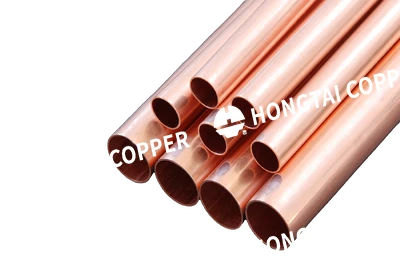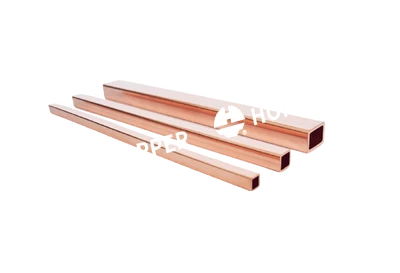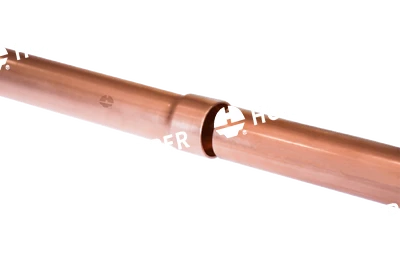

In 2026, commercial HVAC buyers managing large-scale VRF and VRV system installations in hotels, office towers, shopping malls, hospitals, and commercial complexes have moved beyond evaluating only compressor efficiency ratings and inverter technology when specifying system components. The growing recognition that total system energy efficiency is determined by every component in the refrigerant circuit — not only the outdoor unit — has focused procurement attention on the quality of the copper pipe aircond components that carry refrigerant between the outdoor unit, branch devices, and indoor terminal units. Among these components, the air conditioning copper disperse pipe — the branch fitting that divides refrigerant flow from the main line to multiple indoor units — has emerged as one of the most performance-critical and most frequently under-specified elements in VRF system design.
A high-quality air conditioning copper pipe and precision-manufactured disperse pipe can help reduce refrigerant distribution imbalance, minimize pressure loss at branch points, eliminate leakage risk from poor welding, and support the stable refrigerant flow that allows a VRF system to operate at its designed efficiency rating throughout its service life. A poorly manufactured branch pipe — with inconsistent wall thickness, inadequate welding, internal contamination, or incorrect flow channel geometry — can create the turbulence, pressure loss, and refrigerant distribution imbalance that forces the compressor to work harder than necessary, increasing energy consumption and accelerating component wear. Hongtai's air conditioning copper disperse pipe is designed for central air conditioning and VRV multi-connected air conditioning systems, connecting the host unit with multiple terminal devices such as evaporators — with full welding joints, uniform wall thickness, pressure testing before delivery, and compatibility with Gree, Midea, Daikin, Hitachi, and other major central air conditioner brands.
This guide covers the complete picture for commercial HVAC buyers, mechanical and electrical contractors, and building services engineers: why VRF systems lose efficiency through poor refrigerant distribution, what a disperse pipe is and how it functions in VRF system components, how disperse pipe design and manufacturing quality affect HVAC performance and energy efficiency, how to evaluate refnet joint quality and copper pipe aircond specifications, and what installation and maintenance practices protect VRF system performance through the system's service life.
The commercial case for investing in high-quality air conditioning copper pipe and precision-manufactured disperse pipe starts with a clear understanding of the specific performance degradation mechanisms that poor branch pipe quality creates in VRF systems — and why these mechanisms have long-term energy cost consequences that far exceed the cost difference between standard and high-quality branch components.
Uneven refrigerant distribution between indoor units is the most commercially significant performance problem that poor disperse pipe quality creates in VRF systems. A VRF system is designed to deliver precisely controlled refrigerant flow to each indoor unit based on the cooling or heating demand of that zone — but this precise control depends on the branch pipe providing balanced, low-resistance flow paths to each outlet. A disperse pipe with inconsistent internal geometry, burrs from poor manufacturing, or incorrect branch angles creates uneven flow resistance between outlets — causing some indoor units to receive more refrigerant than their design flow rate while others receive less. The result is uneven temperature control across the building, with some zones overcooling or overheating while others fail to meet their setpoint, and the compressor working harder than necessary to compensate for the distribution imbalance.
Excessive pressure loss at branch joints is the energy efficiency problem that accumulates across every branch point in a large VRF system. Each disperse pipe in the refrigerant circuit creates some pressure loss as the refrigerant flow divides and changes direction — but a poorly designed or manufactured branch pipe creates significantly more pressure loss than a well-designed one. In a large commercial VRF system with multiple branch levels and dozens of indoor units, the cumulative pressure loss from poor-quality branch pipes can increase the compressor discharge pressure requirement significantly — forcing the compressor to consume more electrical energy to maintain the required refrigerant flow rate and system capacity.
Leakage risk from inadequate welding is the reliability problem that creates the most serious long-term consequences for commercial HVAC operators. A disperse pipe with incomplete welding, porosity in the weld zone, or inadequate joint preparation creates a potential leakage point that may not manifest immediately but develops over time as the joint is subjected to the thermal cycling, vibration, and pressure fluctuations of normal VRF system operation. Refrigerant leakage reduces system capacity, increases compressor workload, creates environmental compliance risk, and requires expensive service intervention — making welding quality the most safety-critical manufacturing parameter in disperse pipe production.
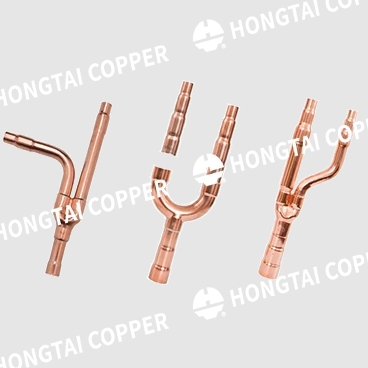
Understanding what a disperse pipe is — and how it functions within the VRF system refrigerant circuit in ways that determine both system performance and energy efficiency — is essential for procurement teams specifying copper pipe aircond components for commercial HVAC projects.
An air conditioning copper disperse pipe — also called a branch pipe, branch device, or refnet joint — is a specially designed copper branch fitting used in VRF and VRV systems to distribute refrigerant from one main line to multiple indoor units. Hongtai states that its air conditioning disperse pipe is applicable to refrigerant diversion in central air conditioning and multi-split air-conditioning systems, connecting the host with multiple terminal equipment — providing the refrigerant distribution function that allows a single outdoor unit to serve multiple indoor units across different zones of a commercial building.
The disperse pipe is the point in the VRF refrigerant circuit where the flow path divides — and it is therefore the point where the quality of the internal flow channel geometry, the precision of the welding, and the cleanliness of the internal surface have the most direct impact on refrigerant distribution balance, pressure loss, and system reliability.
| Function | Performance Impact |
|---|---|
| Refrigerant distribution | Divides flow to multiple indoor units — balance determines zone temperature control |
| Pressure balance support | Reduces uneven flow resistance between branch outlets |
| System connection | Connects outdoor unit piping with indoor terminal equipment |
| Leakage prevention | Sealed welding joints contain refrigerant safely |
| Flow resistance control | Smooth internal geometry reduces unnecessary pressure loss |
| Installation efficiency | Simplifies VRF multi-split piping layout and commissioning |
Hongtai's air conditioning disperse pipe is suitable for Gree, Midea, Daikin, Hitachi, and other central air conditioner brands, with multiple models and complete accessories — and can be used together with Hongtai's air conditioner copper pipe, copper pipe fittings, and rubber insulation pipe for one-stop procurement.
The technical mechanism by which disperse pipe internal flow channel design, welding quality, wall thickness control, and surface cleanliness work together to determine VRF system refrigerant distribution balance, pressure loss, and long-term energy efficiency — and why each manufacturing quality parameter contributes to a specific performance outcome — is the core engineering knowledge that commercial HVAC buyers need to evaluate disperse pipe specifications with confidence.
The internal flow channel geometry of a disperse pipe — the shape, angle, and surface condition of the flow path from the main inlet to each branch outlet — is the primary design parameter that determines how evenly refrigerant is distributed between the branch outlets. A well-designed flow channel uses smooth, gradual transitions from the main flow path to each branch, with branch angles that minimize flow disturbance and distribute the refrigerant momentum evenly between outlets. A poorly designed flow channel with abrupt transitions, sharp angles, or asymmetric geometry creates turbulence and uneven momentum distribution that causes some outlets to receive more refrigerant than others — creating the distribution imbalance that reduces zone temperature control and increases compressor workload.
The practical energy efficiency consequence of refrigerant distribution imbalance is measurable and significant. When some indoor units receive more refrigerant than their design flow rate, they overcool their zones — wasting compressor energy on cooling that is not needed. When other indoor units receive less refrigerant than their design flow rate, they undercool their zones — causing the compressor to run longer to try to meet the setpoint. The net result is higher total compressor energy consumption than a balanced system would require for the same cooling output. A high-quality disperse pipe with optimized flow channel geometry can help commercial HVAC operators target meaningful electricity savings by reducing this distribution imbalance — with the energy saving potential increasing with the size and complexity of the VRF system.
The welding quality of a disperse pipe determines both its leakage resistance and its internal flow cleanliness — two performance parameters that affect VRF system reliability and efficiency in different ways. Hongtai states that its air conditioning disperse pipe features full welding joints and uniform wall thickness, with each branch pipe pressure tested before leaving the factory according to technical requirements exceeding industrial standards to ensure no leakage.
Full welding — complete penetration of the weld through the full joint thickness — is the manufacturing standard that ensures the joint can withstand the thermal cycling, vibration, and pressure fluctuations of VRF system operation without developing leakage over time. Incomplete welding that leaves voids or porosity in the joint creates potential leakage initiation sites that may not cause immediate failure but develop into leaks as the joint is subjected to repeated thermal and pressure cycling. The pressure testing that Hongtai performs on each disperse pipe before delivery provides the objective quality verification that confirms joint integrity — converting the welding quality claim from a manufacturing assertion into a verified performance specification.
The internal surface condition of a disperse pipe — its cleanliness, smoothness, and freedom from oxidation, contamination, and manufacturing residues — directly affects the long-term reliability of the VRF refrigerant circuit. Hongtai states that its air conditioning disperse pipe uses high-quality pure electrolytic copper as raw material and adopts an acid-free cleaning process, making the internal and external surfaces bright while being environmentally friendly and pollution-free.
Contamination inside a disperse pipe — from manufacturing residues, oxidation scale, or inadequate cleaning — can enter the refrigerant circuit and cause compressor damage, expansion valve blockage, and heat exchanger fouling that progressively degrades system performance and eventually requires expensive service intervention. The acid-free cleaning process that Hongtai uses removes manufacturing residues and oxidation without introducing acid residues that could themselves become a contamination source — providing the internal cleanliness that protects refrigerant circuit integrity throughout the system's service life.
The selection of the right disperse pipe specification for a specific VRF system application — and the evaluation of refnet joint quality parameters that determine long-term performance and reliability — requires a systematic approach that addresses the full range of technical and commercial factors that determine procurement success.
| Quality Parameter | What to Verify | Performance Impact |
|---|---|---|
| Copper material grade | High-purity electrolytic copper specification | Thermal conductivity and corrosion resistance |
| Wall thickness uniformity | Consistent wall thickness around full circumference | Pressure stability and manufacturing consistency |
| Welding completeness | Full penetration welding at all joints | Leakage resistance and long-term reliability |
| Internal surface condition | Clean, smooth, free from contamination and oxidation | Refrigerant circuit cleanliness and compressor protection |
| Flow channel geometry | Smooth transitions and balanced branch angles | Refrigerant distribution balance and pressure loss |
| Pressure test documentation | Factory pressure test results for each unit | Verified leakage-free performance before installation |
| Model compatibility | Correct model for VRF brand and indoor unit capacity | System design compliance and installation accuracy |
| Insulation compatibility | Works with rubber insulation tube | Condensation prevention and energy loss reduction |
| Packaging protection | Sealed ends and protective packaging | Internal cleanliness maintained during transport and storage |
High-quality air conditioning copper pipe and disperse pipe deliver the most commercial value for: large commercial VRF systems in hotels, office towers, and shopping malls where refrigerant distribution balance across many indoor units directly affects zone temperature control and energy efficiency, hospital and healthcare facility HVAC systems where system reliability and indoor air quality are critical operational requirements, data center auxiliary HVAC systems where consistent cooling performance is essential for equipment protection, and any commercial building where long-term operating cost reduction through improved HVAC energy efficiency is a procurement objective.
| Application | Primary Performance Requirement | Recommended Specification Direction |
|---|---|---|
| Hotel and resort VRF systems | Stable zone temperature control and guest comfort | Optimized flow channel geometry and full welding |
| Office tower multi-split systems | Energy efficiency and low maintenance cost | Pressure-tested joints and clean internal surface |
| Hospital HVAC systems | Reliability and indoor air quality | High-purity copper and contamination-free manufacturing |
| Shopping mall central AC | Large system efficiency and low operating cost | Balanced distribution and low pressure loss design |
| School and university buildings | Long service life and low maintenance | Durable materials and corrosion-resistant surface treatment |
Procuring the right air conditioning copper pipe and disperse pipe for a commercial VRF system requires systematic pre-order confirmation of technical requirements, compatibility specifications, and documentation requirements — and proper installation and maintenance practices that protect system performance through the equipment's service life.
Before requesting a quotation for air conditioning copper disperse pipe, prepare and confirm the following:
Confirm the VRF or VRV system brand — Daikin, Gree, Midea, Hitachi, or other — and verify that the selected disperse pipe model is compatible with the specific system brand and capacity range
Confirm the indoor unit capacity combination for each branch level — the disperse pipe model must match the total capacity of the indoor units connected to each branch outlet
Confirm the main pipe and branch pipe diameters — verify that the selected disperse pipe inlet and outlet diameters match the copper pipe sizes specified in the system design
Confirm the refrigerant type — R410A, R32, or other — and verify that the disperse pipe material and pressure rating are compatible with the specified refrigerant
Confirm the quantity by model — prepare a complete bill of materials listing each disperse pipe model and quantity required for the project
Confirm the copper pipe length and fittings requirements — Hongtai offers one-stop supply of copper pipe, copper fittings, and rubber insulation tube, allowing complete refrigerant piping procurement from a single supplier
Confirm the pressure test documentation requirement — verify that the supplier provides factory pressure test records for each disperse pipe unit
Confirm the packaging requirement for export or site storage — sealed pipe ends and protective packaging are essential for maintaining internal cleanliness during transport and storage
Confirm the delivery schedule — verify that the supplier's production capacity and logistics capability can meet the project installation timeline
Keep copper pipe ends sealed before installation — dust, moisture, oil, and oxidation scale entering the pipe during storage or installation can contaminate the refrigerant circuit and cause compressor damage
Use nitrogen protection during brazing where required — nitrogen purging during brazing prevents internal oxidation that would otherwise create contamination in the refrigerant circuit
Confirm correct installation direction of the disperse pipe — incorrect orientation can affect refrigerant distribution balance and system performance
Apply proper insulation to all copper pipe and disperse pipe surfaces — inadequate insulation causes condensation, energy loss, and potential water damage to building structures
Support pipes correctly to reduce vibration stress — inadequate pipe support allows vibration from the compressor and refrigerant flow to create fatigue stress at joints and connections
Pressure test the complete system before commissioning — a system pressure test after installation verifies that all joints, including disperse pipe connections, are leak-free before refrigerant is charged
Check for leakage at all branch joints during commissioning and at regular service intervals — early detection of developing leaks allows repair before significant refrigerant loss occurs
Keep service records for future maintenance — documenting the installation date, pressure test results, and service history for each system supports warranty management and planned maintenance scheduling
In 2026, the commercial HVAC buyers who achieve the best long-term energy efficiency and reliability from their VRF system investments are those who recognize that system performance is determined by the quality of every component in the refrigerant circuit — not only the outdoor unit. High-quality air conditioning copper pipe and precision-manufactured disperse pipe with optimized flow channel geometry, full welding joints, pressure-tested leakage resistance, and clean internal surfaces are the foundation of the refrigerant distribution balance and low pressure loss that allow a VRF system to operate at its designed efficiency rating throughout its service life — delivering the electricity savings and reduced maintenance costs that justify the investment in quality components.
Hongtai offers air conditioning copper disperse pipe, copper pipe, copper fittings, rubber insulation tube, and related copper products for one-stop HVAC and refrigeration procurement support — with compatibility for Gree, Midea, Daikin, Hitachi, and other major central air conditioner brands, and manufacturing quality that includes high-purity electrolytic copper, acid-free cleaning, full welding joints, uniform wall thickness, and factory pressure testing.
Contact Hongtai today to discuss your VRF or VRV system brand, disperse pipe model requirements, copper pipe sizes, project quantity, insulation needs, pressure test documentation requirements, and delivery schedule. Hongtai can help evaluate the right air conditioning copper pipe and disperse pipe specification for your commercial HVAC project — and provide the technical documentation and supply reliability that demanding commercial building projects require.
Q1: What is an air conditioning copper pipe and why is it used in VRF systems?
An air conditioning copper pipe is used to carry refrigerant between HVAC system components — connecting the outdoor unit, branch devices, and indoor terminal units in VRF and central air conditioning systems. Copper is the preferred material because it offers high thermal conductivity, corrosion resistance, durability, and reliable refrigerant transport — properties that are essential for the long-term performance and reliability of commercial HVAC systems.
Q2: What is a disperse pipe and what does it do in a VRF system?
A disperse pipe is a copper branch fitting used in VRF and VRV systems to divide refrigerant flow from the main line to multiple indoor units. It is the point in the refrigerant circuit where the flow path divides, and its internal flow channel geometry, welding quality, and surface cleanliness directly determine refrigerant distribution balance, pressure loss, and system reliability.
Q3: How does disperse pipe quality affect VRF HVAC performance and energy efficiency?
Disperse pipe quality affects VRF performance through three mechanisms: internal flow channel geometry determines refrigerant distribution balance between indoor units, welding quality determines leakage resistance and long-term reliability, and internal surface cleanliness determines refrigerant circuit integrity and compressor protection. A high-quality disperse pipe with optimized flow channel geometry, full welding, and clean internal surface can help reduce pressure loss, improve distribution balance, and lower compressor workload — supporting meaningful electricity savings over the system's service life.
Q4: What should buyers check when evaluating refnet joint quality?
Buyers should check copper material grade and purity, wall thickness uniformity, welding completeness and penetration, internal surface cleanliness and freedom from contamination, flow channel geometry and branch angles, factory pressure test documentation, model compatibility with the VRF system brand and capacity, insulation compatibility, and packaging protection for transport and storage.
Q5: Why is copper preferred over other materials for air conditioning pipe systems?
Copper is preferred for air conditioning pipe systems because it offers high thermal conductivity that supports efficient heat transfer, strong corrosion resistance that provides long service life in refrigerant environments, durability that withstands the thermal cycling and pressure fluctuations of HVAC operation, and reliable brazing and joining characteristics that support leak-free installation. These properties make copper the standard material for refrigerant piping in commercial HVAC systems globally.
Q6: Can high-quality disperse pipe improve commercial HVAC energy efficiency?
Yes. High-quality disperse pipe with optimized flow channel geometry reduces pressure loss at branch points, improves refrigerant distribution balance between indoor units, and reduces the compressor workload required to maintain system capacity. These improvements can support meaningful electricity savings over the system's service life — with the energy saving potential increasing with the size and complexity of the VRF system and the number of branch levels in the refrigerant circuit.
Q7: Does Hongtai provide disperse pipe compatible with major VRF system brands?
Yes. Hongtai states that its air conditioning disperse pipe is applicable to Gree, Midea, Daikin, Hitachi, and other central air conditioner brands, with multiple models and complete accessories. Hongtai also offers one-stop supply of copper pipe, copper fittings, and rubber insulation tube for complete refrigerant piping procurement.