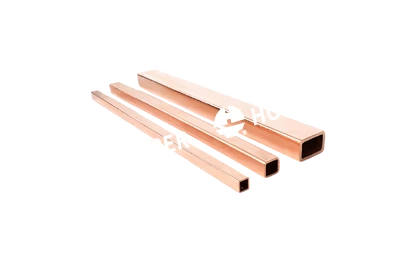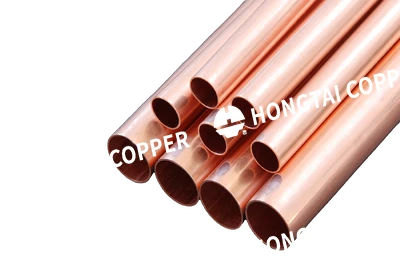

For commercial buildings, hotels, hospitals, restaurants, laboratories, factories, and mixed-use developments specifying gas piping systems in 2026, the material selection decision between copper gas pipe, stainless steel, and corrugated stainless steel tubing has moved well beyond a simple unit price comparison. The combination of installation labor cost, fitting quantity, routing complexity, code compliance requirements, maintenance workload, system lifespan, and the specific performance requirements of special-use applications — including copper pipe for oxygen and medical gas systems — means that the material with the lowest purchase price is frequently not the material that delivers the lowest total installed cost or the best long-term return on investment.
Commercial buyers who ask only "which pipe is cheaper per meter" are evaluating the wrong variable. The more commercially relevant question is: which gas pipe material delivers the best balance of safety compliance, installation efficiency, corrosion resistance, maintenance reduction, and lifecycle ROI for the specific project conditions — the gas type, pressure rating, routing complexity, labor skill level, local code requirements, and expected service life? Hongtai's copper gas tube is designed for natural gas and LPG distribution in residential and commercial buildings, using 99.9% pure copper with corrosion resistance, durability, smooth surfaces, nitrogen pressure retention, and oxidation prevention — with seamless construction for leak-proof performance and a 50-plus year service life expectancy that changes the total cost calculation significantly when maintenance and replacement costs are included.
This guide covers the complete picture for commercial project buyers, mechanical and electrical contractors, building services engineers, and procurement managers: why commercial gas piping projects need more than the lowest material price, what copper gas pipe is and where it fits in commercial gas piping systems, how copper's material properties support safety, installation efficiency, and long-term ROI, how copper compares with stainless steel and CSST across the full range of commercial procurement factors, and what specification and maintenance practices protect gas piping system performance through the installation's service life.
The commercial case for evaluating copper gas pipe on total installed cost rather than material price starts with a clear understanding of the cost components that determine the real economics of a commercial gas piping installation — and why the material price is typically a smaller fraction of the total project cost than buyers initially assume.
Installation labor cost is typically the largest single cost component in a commercial gas piping project — and it is the cost component most directly affected by material selection. A pipe material that can be bent to follow routing paths without additional fittings, that can be installed using efficient connection methods, and that allows prefabrication of sections off-site reduces the labor hours required for installation. A pipe material that requires more fittings, more complex joining procedures, or more on-site fabrication increases labor hours — and in commercial projects where labor rates are significant, the labor cost difference between material options can easily exceed the material price difference.
Fitting quantity and cost is the second cost component that material selection directly affects. A flexible copper gas line that can be bent to follow routing paths requires fewer elbows, tees, and transition fittings than a rigid pipe system that must use fittings at every direction change. In a commercial building with complex routing through walls, ceilings, and mechanical rooms, the reduction in fitting quantity from using a bendable pipe material can represent significant cost savings — and each fitting eliminated also eliminates a potential leak point, improving system reliability.
Maintenance and replacement cost over the system's service life is the cost component that most dramatically changes the total cost calculation when a long-service-life material like copper is compared with alternatives. Hongtai states that its copper gas tubes provide a 50-plus year service life expectancy — a service life that, when amortized over the installation's operating period, makes the higher initial material cost of copper competitive with or superior to lower-cost alternatives that require earlier replacement or more frequent maintenance intervention.
The correct total cost evaluation framework for commercial gas piping is:
Total Gas Pipe ROI = Material Cost + Fittings Cost + Labor Cost + Testing Cost + Maintenance Cost + Replacement Cost Risk over Expected Service Life
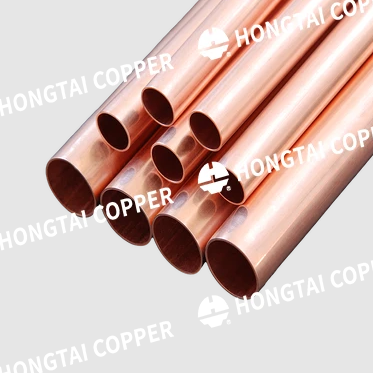
Understanding what copper gas pipe is — and how its material properties, product forms, and application range fit within the broader commercial gas piping system — is essential for procurement teams evaluating copper against stainless steel and CSST alternatives.
A copper gas pipe is a copper tube used to transport fuel gas — natural gas, LPG, or specialty gases — in approved building gas piping systems. Hongtai describes its copper gas tubes as suitable for natural gas and LPG distribution in residential and commercial buildings, with seamless construction for leak-proof performance at pressures up to 150 psi. The seamless construction — no longitudinal weld seam — is a critical quality feature for gas service, because it eliminates the weld seam as a potential weak point and provides uniform wall thickness and mechanical properties around the full pipe circumference.
Copper gas pipe should be viewed as a professional gas distribution component — not a generic plumbing tube. Buyers must match the material, standard, pressure rating, cleanliness, joining method, and local code requirements to the specific project conditions before specifying copper for gas service.
The most demanding application for copper gas pipe is medical gas and oxygen systems in hospitals and healthcare facilities. Hongtai notes that medical gas systems are life-support systems in hospitals, and that medical gas pipelines face higher requirements than ordinary building pipelines because they can involve high pressure, many branches, multiple media, and complex safety requirements. For copper pipe for oxygen service, the key requirements are internal cleanliness — freedom from oil, grease, and contamination that could create ignition risk in oxygen-enriched atmospheres — pressure reliability, connection quality, and system safety documentation. Copper's material stability, mature joining technology, and suitability for oxygen-clean service make it the standard material for medical gas piping in healthcare facilities globally.
| Application | Gas or Medium | Key Copper Advantage |
|---|---|---|
| Commercial kitchens | Natural gas or LPG | Routing flexibility and corrosion resistance |
| Hotels and apartments | Gas distribution | Long service life and clean installation |
| Hospitals | Medical gas and oxygen | Cleanliness, reliability, and oxygen-safe material |
| Laboratories | Specialty gas lines | Clean, stable material performance |
| HVAC and boiler rooms | Fuel gas | Reliable gas delivery to equipment |
| Industrial buildings | Process or fuel gas | Durable piping for controlled environments |
The technical mechanism by which copper's material properties — corrosion resistance, bendability, smooth internal surface, mature joining technology, and long service life — work together to deliver safety, installation efficiency, and long-term ROI in commercial gas piping applications is the core engineering knowledge that procurement teams need to evaluate copper gas pipe specifications with confidence.
Copper's corrosion resistance in gas piping applications comes from two mechanisms: the natural copper oxide layer that forms on the pipe surface and provides barrier protection against further oxidation, and copper's inherent resistance to the sulfur compounds and moisture that are present in natural gas and LPG. Hongtai states that its copper gas tubes provide natural copper oxide layer protection, resistance to sulfur compounds in gas, no internal scaling or buildup, and a 50-plus year service life expectancy — reflecting the material properties that make copper the long-service-life choice for commercial gas piping.
The practical consequence of copper's corrosion resistance for commercial buyers is a gas piping system that maintains its structural integrity and flow performance throughout a service life that spans multiple building renovation cycles — eliminating the replacement cost and operational disruption that shorter-service-life materials create.
Copper's bendability — particularly in the soft-temper or annealed condition — is the material property that most directly reduces installation labor cost and fitting count in commercial gas piping projects. A flexible copper gas line can be bent to follow routing paths through walls, ceilings, and mechanical rooms without additional fittings at each direction change — reducing the number of joints in the system, the labor time required for installation, and the number of potential leak points that must be tested and maintained.
In a commercial building with complex routing requirements, the reduction in fitting count from using bendable copper can represent significant cost savings. Each elbow or coupling eliminated saves the material cost of the fitting, the labor time for installation and joining, and the testing time for leak verification — and in a large commercial project with hundreds of direction changes, these savings accumulate to a meaningful fraction of the total installation cost.
Copper gas pipe benefits from decades of development in joining technology — brazing, flaring, and approved press-fit systems — that provide installation teams with efficient, reliable, and code-compliant connection methods. Brazed joints provide the highest strength and leak resistance for permanent gas piping installations. Flared connections provide reliable mechanical joints for accessible locations. Approved press-fit gas fittings — where permitted by the authority having jurisdiction — provide the fastest installation method, allowing connections to be made without heat or open flame and reducing installation time significantly compared with brazed joints.
The maturity of copper joining technology means that installation teams with standard copper pipe training can work efficiently with copper gas pipe — reducing the learning curve and skill premium that newer or less common pipe materials may require. This labor efficiency advantage is particularly significant in commercial projects where installation schedule and labor cost are primary procurement concerns.
Copper tube can be used for natural gas and LP gas in approved systems — but acceptance depends on the pipe standard, gas composition, joining method, and local jurisdiction. ASTM B837 is a standard specification for seamless copper tube for natural gas and liquefied petroleum gas fuel distribution systems. However, local jurisdictions may restrict copper use for natural gas even where model codes recognize it — making local code verification an essential step in copper gas pipe specification. Buyers must confirm local code approval before specifying copper for natural gas service, and must use the correct pipe standard, joining method, and fittings for the specific gas type and pressure rating.
The selection between copper gas pipe, stainless steel pipe, and corrugated stainless steel tubing for commercial gas piping applications is not a universal preference question — it is an application-specific engineering and commercial decision that depends on the project conditions, code requirements, installation environment, and total cost calculation.
| Evaluation Factor | Copper Gas Pipe | Stainless Steel Pipe | CSST |
|---|---|---|---|
| Corrosion resistance | Strong — natural oxide layer and sulfur resistance | Strong — depends on grade and coating | Strong — stainless steel construction |
| Bendability | Good — soft copper can be bent for routing | Limited — rigid pipe requires fittings | Excellent — designed for flexible routing |
| Installation speed | Fast with press-fit or prefabrication | Slower — threading or welding required | Fast for long flexible runs |
| Fitting count | Reduced by bendability | Higher for complex routing | Reduced by flexibility |
| Medical gas suitability | Excellent — standard material for oxygen and medical gas | Depends on system design | Less common for medical gas |
| Service life | 50-plus years with proper installation | Long service life depending on grade | Long service life with proper bonding |
| Code acceptance | Must be verified locally for natural gas | Must be verified locally | Requires manufacturer-specific fittings and bonding |
| Total installed cost | Competitive when labor savings are included | Higher labor cost for complex routing | Competitive for long flexible runs |
Copper gas pipe is the stronger commercial choice when: the project requires medical gas or oxygen service where copper is the standard material, the routing complexity benefits from copper's bendability to reduce fitting count and labor cost, the project requires a 50-plus year service life that eliminates replacement cost over the building's operating period, the installation team has strong copper pipe skills that allow efficient installation, or the project is in a jurisdiction where copper is approved for the specific gas type and pressure rating.
Stainless steel or CSST may be preferred when: the project requires long flexible runs through complex spaces where CSST's flexibility provides a significant routing advantage, the local code does not permit copper for the specific gas type, the project requires a material that is not subject to the local restrictions that may apply to copper for natural gas, or the installation team has stronger stainless steel or CSST skills than copper pipe skills.
Procuring the right copper gas pipe for a commercial gas piping project requires systematic pre-order confirmation of technical requirements, code compliance, and documentation requirements — and proper installation and maintenance practices that protect system safety and performance through the installation's service life.
Before requesting a quotation for copper gas pipe, prepare and confirm the following:
Confirm local code approval for copper gas pipe for the specific gas type — natural gas, LPG, oxygen, medical gas, or specialty gas — and pressure rating in the project jurisdiction
Confirm the required pipe standard — ASTM B837 for natural gas and LP gas, or the applicable medical gas standard for oxygen and medical gas service
Confirm the pipe diameter, wall thickness, and length or coil requirement for each section of the gas piping system
Confirm the pressure rating requirement — verify that the selected pipe specification provides adequate pressure capacity for the system design pressure with the required safety factor
Confirm the joining method — brazing, flaring, approved press-fit, or other approved mechanical fittings — and verify that the selected method is approved for the gas type, pressure, and local code
Confirm the cleanliness requirement — oxygen-clean service requires special internal cleaning and handling procedures that must be specified and verified with the supplier
Confirm the surface condition and packaging requirement — nitrogen-purged and sealed pipe ends maintain internal cleanliness during transport and storage
Confirm the test documentation requirement — pressure test reports, material certificates, and cleanliness verification for oxygen service
Confirm the quantity by size and delivery schedule — verify that the supplier's production capacity and logistics capability can meet the project installation timeline
Keep copper pipe ends sealed before installation — dust, moisture, oil, and contamination entering the pipe during storage or installation create safety risk in gas service
Use nitrogen protection during brazing where required — nitrogen purging during brazing prevents internal oxidation that could contaminate the gas system
Inspect visible pipe runs regularly for impact damage, corrosion, or unauthorized modifications — early detection of damage allows repair before it creates a safety risk
Check supports and brackets to prevent vibration stress — inadequate pipe support allows vibration to create fatigue stress at joints and connections over time
Pressure test the complete system before commissioning — a system pressure test after installation verifies that all joints are leak-free before gas is introduced
For oxygen service, maintain cleanliness and avoid oil or grease contamination at all times — oil or grease contamination in an oxygen system creates a serious fire and explosion risk
Keep installation records, pressure test reports, and material certificates — documentation is required for code compliance, warranty management, and future maintenance planning
Follow local gas code and professional inspection requirements — gas piping systems in commercial buildings are subject to periodic inspection requirements that must be planned and documented
In 2026, the commercial buyers who achieve the best return on gas piping system investment are those who evaluate material selection on total installed cost — material, fittings, labor, testing, maintenance, and service life — rather than material price alone. Copper gas pipe's combination of corrosion resistance, bendability, mature joining technology, long service life, and suitability for the most demanding special-use applications including medical gas and oxygen service makes it a commercially compelling choice for a wide range of commercial gas piping projects when the complete cost picture is evaluated.
Hongtai supplies copper gas tube made from 99.9% pure copper for natural gas and LPG distribution, with corrosion resistance, durability, smooth surfaces, nitrogen pressure retention, oxidation prevention, and long service life — along with medical gas copper tube, copper fittings, copper straight tubes, copper coils, and related copper products for commercial, medical, HVAC, and gas distribution applications.
Contact Hongtai today to discuss your gas type, pipe size, pressure requirement, connection method, oxygen-clean requirement, project location, documentation needs, and delivery schedule. Hongtai can help evaluate the right copper gas pipe specification for your commercial project and provide the technical documentation and supply reliability that demanding commercial gas piping projects require.
Q1: Is copper pipe safe for natural gas in commercial buildings?
Copper pipe can be used for natural gas in approved systems, but buyers must confirm the correct pipe standard, gas composition, joining method, and local code approval before specifying copper for natural gas service. ASTM B837 covers seamless copper tube for natural gas and LP gas fuel distribution systems, but local jurisdictions may restrict copper use even where model codes recognize it. Local code verification is an essential step in copper gas pipe specification for any commercial project.
Q2: What is the main advantage of copper gas pipe over stainless steel for commercial projects?
Copper gas pipe offers several advantages over stainless steel for commercial projects: bendability that reduces fitting count and installation labor cost, mature joining technology including brazing and approved press-fit systems that allow efficient installation, strong corrosion resistance with a 50-plus year service life expectancy, and standard suitability for medical gas and oxygen applications. The total installed cost advantage of copper depends on the specific project conditions, but is most significant in projects with complex routing requirements and long service life expectations.
Q3: What is the difference between copper gas pipe and CSST for commercial gas piping?
Copper gas pipe is a copper tube available in rigid straight lengths or flexible coils depending on temper and format. CSST is corrugated stainless steel tubing designed specifically for flexible gas routing. Copper offers stronger corrosion resistance, mature medical gas application, and a longer service life expectancy. CSST offers greater flexibility for long continuous runs through complex spaces. The best choice depends on code approval, installation layout, labor cost, and system requirements for the specific project.
Q4: How does copper gas pipe reduce the total installation cost of gas pipes?
Copper reduces total installation cost through three mechanisms: bendability that reduces the number of fittings required for complex routing, efficient joining methods including approved press-fit systems that reduce labor time per connection, and a long service life that eliminates replacement cost over the building's operating period. Buyers who compare only material price may underestimate copper's total cost advantage — the correct comparison includes material, fittings, labor, testing, maintenance, and service life.
Q5: Can copper pipe be used for oxygen and medical gas systems?
Yes. Copper pipe is the standard material for medical gas and oxygen systems in hospitals and healthcare facilities when properly specified, cleaned, installed, and tested. The key requirements for oxygen service are internal cleanliness — freedom from oil, grease, and contamination — pressure reliability, connection quality, and system safety documentation. Hongtai notes that medical gas copper pipe is used as a carrier for oxygen and other gases in hospital systems, with higher requirements than ordinary building pipelines.
Q6: What should commercial buyers confirm before ordering copper gas pipe?
Buyers should confirm local code approval for the specific gas type and pressure rating, the required pipe standard, pipe diameter and wall thickness, pressure rating, joining method approval, cleanliness requirement for oxygen service, surface condition and packaging, test documentation requirements, quantity by size, and delivery schedule — providing this information allows the supplier to confirm the correct specification and provide an accurate technical and commercial proposal.
Q7: What makes Hongtai copper gas pipe suitable for commercial projects?
Hongtai offers copper gas tubes made from 99.9% pure copper with seamless construction for leak-proof performance, natural copper oxide layer protection, resistance to sulfur compounds in gas, no internal scaling or buildup, nitrogen pressure retention, oxidation prevention, and a 50-plus year service life expectancy — providing the material quality and performance documentation that commercial gas piping projects require.