
When overseas buyers search for copper tubes, they often run into several grade names at the same time: TP2, C12200, C1220, Cu-DHP, and sometimes T2. That overlap creates confusion, especially for HVAC manufacturers, refrigeration assemblers, wholesalers, and project buyers who need to know whether these names refer to the same material, what the chemical limits are, and which products are most suitable for brazing, forming, and long-term service. In practice, the fastest way to reduce purchasing risk is to connect the material designation to a real product application, a real standard, and a real supplier response process. That is the purpose of this article.
Hongtai, formally Qingdao Hongtai Copper Co., Ltd., works in copper tube and copper fitting supply, with strong relevance in application-driven products such as pancake copper coil, copper pipe china supply, and medical copper tube solutions. For a buyer, material words are not just academic labels. They affect product compatibility, export communication, MTC review, welding and brazing behavior, cleanliness requirements, and the ability to match a tube to the final market standard. A good material guide must therefore combine engineering facts with procurement logic.
This guide explains the relationship between TP2 and C12200, reviews c12200 composition and c12200 chemical composition, clarifies how t2 copper material differs, and shows how grade selection connects to tube form, end use, documentation, and purchasing requirements.
TP2 copper is a phosphorus-deoxidized copper grade widely used for copper tubes in HVAC, refrigeration, plumbing, and medical gas systems.
In the Chinese material designation system, TP2 is a familiar and commercially important grade because it combines good copper purity with a controlled phosphorus content that improves process stability in tube applications. Buyers often prefer TP2 for coil and straight tube projects because the grade is associated with dependable formability, good brazing performance, and reduced sensitivity to hydrogen embrittlement compared with oxygen-bearing copper used in certain other conditions. In practical terms, TP2 is not “just copper.” It is a controlled copper grade chosen to support manufacturing performance and field reliability.
A procurement conversation usually starts with a simple question such as “Do you supply TP2 copper tube?” But that question has at least five hidden sub-questions behind it: What standard does the supplier mean by TP2? Does the supplier also recognize C12200 or C1220? Is the product meant for refrigeration, water, or medical gas? Is the temper hard or soft? What certificate will be available for shipment? A strong B2B materials page must answer those hidden questions early, otherwise the buyer will keep comparing multiple suppliers and may never reach inquiry stage.
Hongtai supplies copper tubes and fittings for HVAC, refrigeration, plumbing, and medical gas applications. When a buyer specifies TP2, Hongtai can confirm the corresponding material designation, required product form, temper, dimensions, testing documents, and packaging conditions before production.
TP2 and C12200 are commonly treated as corresponding grades in international trade, although they come from different standards systems and should not be described as absolutely identical in every specification detail.
This distinction matters. From the point of view of market communication, buyers searching c12200 copper, copper c12200, or c12200 copper pipe are usually looking for the same material family that Chinese suppliers refer to as TP2. However, a professional supplier should still explain that TP2 belongs to the Chinese grade system, while C12200 belongs to the UNS/ASTM naming logic that is more common in North American and export documentation. That is why the correct wording is “commonly corresponding” or “widely equivalent in trade practice,” not “identical under all conditions.”
This nuance is important during technical review because an RFQ may use TP2, C12200, C1220, or Cu-DHP while the purchase specification also refers to a particular national or product standard. The buyer should confirm both the material grade and the finished-product standard rather than relying on the grade name alone.
A clear technical description is: TP2 is the Chinese designation commonly corresponding to UNS C12200, and both belong to the phosphorus-deoxidized copper family used extensively in copper tube applications. Final acceptance should still follow the agreed product standard, temper, dimensions, and certificate requirements.
C12200 is a phosphorus-deoxidized copper grade whose defining chemistry is copper not less than 99.90% and phosphorus typically in the 0.015% to 0.040% range.
For buyers searching c12200 composition or c12200 chemical composition, what they usually want is not just a number table. They want confirmation that the material is suitable for tube manufacture, compatible with their fabrication route, and recognized by the standards they use in sourcing or installation. The chemistry is therefore best explained together with its purchasing significance. High copper content supports conductivity and thermal performance. Controlled phosphorus helps deoxidize the copper and supports hot workability and brazing behavior. In many copper tube applications, that balance is more commercially meaningful than an isolated purity figure.
| Item | Typical C12200 / TP2 Data | Why It Matters |
|---|---|---|
| Copper (Cu) | ≥ 99.90% | Supports conductivity, corrosion performance, and commercial quality consistency |
| Phosphorus (P) | 0.015% - 0.040% | Defines the deoxidized copper family and supports forming and joining performance |
| Material family | Phosphorus-deoxidized copper | Useful for HVAC, refrigeration, plumbing, and clean tube uses |
| Common trade equivalents | TP2 / C12200 / C1220 / Cu-DHP / CW024A | Reduces confusion when multiple standards appear in one RFQ |
Another way to make this information valuable is to place it in the context of real products. For example, buyers requesting copper tube for HVAC coils may not ask about phosphorus directly, but they care deeply about flare quality, bending performance, joint stability, and export consistency. The chemistry helps explain why a product performs in those downstream operations. That makes a technical composition table more than a reference note; it becomes part of the selling argument.
These chemical limits should be checked against the agreed material certificate rather than treated as a general marketing claim. The certificate should identify the heat or batch and allow the buyer to connect the reported chemistry to the delivered tube products.
TP2 copper and T2 copper material are not the same grade, and they should not be used as interchangeable terms in export product communication.
TP2 and T2 should be compared directly rather than presented as synonyms. TP2 belongs to the phosphorus-deoxidized copper family, while T2 is generally associated with a high-conductivity tough-pitch copper designation in Chinese usage. Their composition logic, processing behavior, and common applications are different.
From a buying perspective, the difference affects how the material is evaluated. If the application needs a deoxidized copper tube for brazing and tube-forming stability, TP2/C12200 is usually the right conversation. If the buyer’s priority is another conductivity-driven grade framework, T2 may enter the discussion. That is why Hongtai should use T2 as a comparison keyword inside educational content, not as the headline identity of its TP2/C12200 commercial pages.
| Aspect | TP2 | C12200 | T2 |
|---|---|---|---|
| Standards logic | Chinese designation | UNS / ASTM designation | Chinese tough-pitch copper designation |
| Material family | Phosphorus-deoxidized copper | Phosphorus-deoxidized copper | High-conductivity copper family |
| Commercial relationship | Often corresponding to C12200 | Often corresponding to TP2 | Not the same as TP2/C12200 |
| Best page use | Main target keyword | Main target keyword | Comparison / FAQ keyword |
The comparison is especially useful when an engineering drawing, supplier quotation, and end-market standard use different naming systems. It prevents the buyer from approving a material solely because the grade names look similar.
C12200 copper pipe is widely used because the grade combines export-recognized chemistry with the tube performance needed in HVAC, refrigeration, plumbing, and clean gas systems.
The key point is not only that the material exists in many standards lists. The key point is that it performs well in real manufacturing and installation workflows. For example, a copper tube supplier serving air-conditioning customers cares about smooth drawing, good annealing response, and stable joining behavior. A medical gas buyer cares about cleanliness, capping, packaging, and certification. A plumbing buyer cares about durability, compatibility, and standard recognition. TP2/C12200 works well because it can support all of these conversations without creating material confusion in the RFQ process.
The TP2/C12200 material family can be supplied in several tube forms, including pancake coils, level-wound coils, straight tubes, insulated lines, inner-grooved tubes, and clean tubes for specialized applications. The correct form depends on the manufacturing process, installation method, cleanliness level, and packing requirement.
That is why material pages should not stop at chemistry. They should answer the next buyer question: “Which product form should I order?” A strong TP2/C12200 content piece should always connect material language to actual supply options, applications, and inquiry triggers.
Matching TP2 / C12200 to the right product form requires the buyer to define the application first. Coil products are often selected for HVAC and refrigeration manufacturing or installation, while straight tubes may be preferred for structured fabrication, plumbing, or project-based supply. Medical gas applications require additional attention to cleaning, end protection, and documentation.
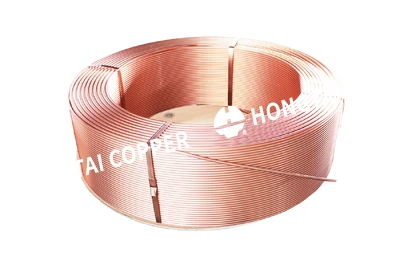
For HVAC assembly, a pancake copper coil may provide compact handling and practical installation lengths. Buyers requiring a broader range can review Hongtai’s copper pipe china supply, while healthcare projects can refer to the medical copper tube product information and confirm the applicable cleanliness and standard requirements.
Before quotation, the buyer should state the product form, outside diameter, wall thickness, temper, standard, quantity, packing method, and end use. These details allow Hongtai to determine whether an existing product specification is suitable or whether additional clarification is required.
Below is a simple buyer decision framework that Hongtai can reuse in product and article pages:
| Buyer Situation | Best Next Step | Suggested Hongtai Route |
|---|---|---|
| Needs grade clarification | Explain TP2 vs C12200 vs T2 | Material guide article + PDF |
| Needs HVAC tube product | Select by form and application | Pancake coil / copper tube / LWC pages |
| Needs medical gas tube | Focus on cleanliness and compliance | Medical copper tube page |
| Needs quotation | Collect OD, wall thickness, temper, quantity, standard | Contact page + inquiry CTA |
TP2 / C12200 creates real value in applications where copper tube performance, forming stability, and recognized export-grade communication are all important.
In HVAC and refrigeration systems, buyers often care about heat-transfer performance, line reliability, and the ease of forming coils and bends. Pancake coils and straight tubes are common selection routes depending on factory handling and installation preferences. In plumbing, the value lies in predictable performance and recognition across international supply chains. In medical gas systems, the focus becomes stricter, with cleanliness and documentation taking on more importance. The same grade family can support these different applications because the product design and process controls adapt to the end use.
The end-use application determines which technical properties and process controls deserve the most attention. HVAC coil production emphasizes forming and heat-transfer applications; plumbing focuses on dimensional and installation compatibility; medical gas systems place greater emphasis on cleanliness, capped ends, traceability, and compliance documents.
A mill test certificate for TP2 / C12200 should confirm the grade identity, chemical composition, dimensions, and batch traceability so that the buyer can connect the document to the ordered tube product confidently.
In actual purchasing, many problems happen not because the material is wrong, but because the document review is weak. A buyer may approve a shipment too quickly, or a seller may send a document that does not clearly connect the heat number, lot, or size range to the goods in the container. This is why a TP2/C12200 guide should teach document reading in simple language. At a minimum, the certificate should show the grade designation, the chemical test values or conformance statement, the product dimensions, and some form of production or shipment traceability. If the buyer’s market requires a particular standard reference, that should also be aligned before shipment.
Buyers can ask Hongtai for the available mill test certificate format before placing an order. The document should be reviewed together with the purchase specification so that the material designation, product dimensions, batch information, and test results are consistent.
A certificate review should include more than checking whether “C12200” appears on the page. The buyer should verify that the chemistry, batch number, dimensions, temper or condition, and referenced standard correspond to the actual goods being supplied.
Grade content supports global procurement communication by translating material names across standards systems and by reducing misunderstandings between engineers, sourcing teams, and overseas customers.
One of the hidden costs in international purchasing is terminology friction. An engineer may write C12200 in the specification, a sourcing manager may request TP2 quotations from Chinese suppliers, and a European project document may refer to Cu-DHP. These references may describe corresponding material families, but the team should agree on one controlled specification for the final purchase order.
This matters even more when multiple people influence the buying decision. A distributor may care about the commercial name that moves quickly in the local market. An engineer may care about the chemistry and standard. A finance or procurement officer may care about the comparability of offers across suppliers. Good grade content supports all three. It explains the material family, lists the key chemistry, clarifies where equivalence is practical, and reminds the buyer to match the grade conversation to the product and end use.
Hongtai can support cross-border purchasing by confirming the requested designation, identifying the closest available product standard, and noting any points that require buyer approval before production. Clear communication is particularly important when several standards systems appear in the same RFQ.
A TP2 copper or C12200 copper pipe procurement checklist should include at least eight items: product form, outside diameter, wall thickness, temper, standard requirement, quantity, packing requirement, and destination application.
Buyers often lose time by sending vague requests such as “Need TP2 copper tube, please quote.” A better RFQ gives the supplier enough information to match the correct product quickly and reduces multiple rounds of clarification. In addition to the eight core items above, some projects also need delivery timing, clean-end requirements, or inspection and documentation requests. The more clearly the RFQ is structured, the faster the quotation process becomes.
A complete inquiry should include enough information for the supplier to prepare an accurate offer. When dimensions, temper, standard, quantity, packing, and application are stated clearly, both technical review and quotation can proceed with fewer clarification rounds.
For AI-driven search behavior, checklists are also highly useful. When people ask conversational questions in large language interfaces—such as “What should I send to a copper tube supplier?”—a structured checklist section gives the page a higher chance of being summarized or cited.
Surface condition, cleanliness, and packaging requirements should be defined according to the final application because the same TP2 / C12200 grade can be supplied for very different service environments.
For general HVAC and refrigeration use, buyers usually focus on tube cleanliness, freedom from visible damage, end protection, and packing that prevents deformation during transport. For medical gas applications, the cleanliness requirement is more demanding, and the buyer should confirm whether the tube is cleaned, capped, identified, and packed in accordance with the specified project standard. For straight tubes and coils used in factory processing, surface protection and winding stability also affect downstream feeding, bending, and cutting.
The purchase order should state any special requirements for capped ends, internal cleanliness, surface finish, moisture protection, labeling, and pallet or coil packing. These conditions are part of the finished-product specification and should not be assumed from the material grade alone.
1. What is TP2 copper used for?
TP2 copper is commonly used for copper tubes in HVAC, refrigeration, plumbing, and certain clean gas applications because it is a phosphorus-deoxidized copper grade suited to tube manufacturing and joining.
2. Is TP2 the same as C12200?
They are commonly treated as corresponding grades in trade practice, but they originate from different standards systems, so it is better to describe them as corresponding or equivalent grades rather than absolutely identical in every detail.
3. What is the C12200 composition?
The key published chemistry is copper not less than 99.90% and phosphorus typically in the 0.015% to 0.040% range. This is why C12200 belongs to the phosphorus-deoxidized copper family.
4. Is T2 copper material the same as TP2?
No. T2 and TP2 are not the same designation. TP2 belongs to the phosphorus-deoxidized copper family, while T2 is generally treated as a different high-conductivity copper designation.
5. Why do buyers search for c12200 copper pipe?
Because C12200 is a widely recognized export material name, especially in documentation and RFQs connected to tube products for HVAC, refrigeration, and other industrial uses.
6. What information should I send when asking Hongtai for TP2 / C12200 copper tubes?
Send the product form, outside diameter, wall thickness, temper, standard requirement, quantity, packing preference, and end use. If required, also ask for the mill test certificate and delivery lead time.
TP2 and C12200 belong to the same practical sourcing conversation, but the final order must still identify the agreed material designation and finished-product standard. By checking chemistry, temper, dimensions, certificate requirements, product form, and end use together, buyers can select copper tubes with greater confidence and avoid misunderstandings between different standards systems.
If you are currently sourcing TP2 / C12200 tubes, Hongtai can help you match the grade to the right product form and project requirement. Request the size list, ask for the mill test certificate, or send your RFQ with OD, wall thickness, temper, and quantity to receive a faster quote and a more accurate recommendation.