
Choosing a copper tube for HVAC and refrigeration is rarely just about finding a diameter and placing an order. For OEM factories, contractors, distributors, and importers, the decision also involves working pressure, forming method, installation environment, coil handling, cleanliness, insulation, lead time, and cost control. That is why high-intent buyers often search very specific product expressions such as pancake copper coil, pancake copper tube, lwc copper coil, or copper pipe china rather than just “copper.” Each of those searches reveals a slightly different purchase intention.
Hongtai supplies pancake coils, LWC coils, straight copper tubes, and related tube forms for different production and installation conditions. The selection process should begin with the application and workflow, then move to dimensions, temper, cleanliness, packing, and required standards.
Buyers can compare Hongtai’s pancake copper coil, lwc copper coil, and broader copper pipe china supply according to the production or installation workflow. The comparison below focuses on handling, automation, freight, forming, and field joining conditions.
Copper tube selection matters because product form directly affects manufacturing efficiency, installation speed, refrigeration system reliability, and total project cost.
Many buyers underestimate the importance of form factor. They may focus heavily on grade or price and assume a copper tube is a copper tube. In reality, the difference between a pancake coil and a straight tube can change labor time, scrap rate, packing density, and machine compatibility. In modern HVAC production, even small differences in handling can influence output at scale. If a plant is producing hundreds or thousands of units, the right tube form can save significant time in bending, feeding, cutting, or connection preparation.
Reliable numbers help illustrate why form matters. A copper tube project is typically evaluated across at least six dimensions: outside diameter, wall thickness, temper, length or coil weight, cleanliness or packaging condition, and joining or forming route. If any one of those six is misaligned with the end use, the cost of rework can exceed the apparent savings from a lower initial quote. That is why professional suppliers and serious B2B buyers insist on clarifying technical and commercial details early.
Different buyers prioritize different operating requirements. A distributor may need flexible SKU coverage, a heat exchanger plant may require stable continuous feeding, a contractor may prioritize bendability and jobsite handling, and a medical project may require controlled cleanliness and documentation. The same tube form will not be ideal for every buyer.
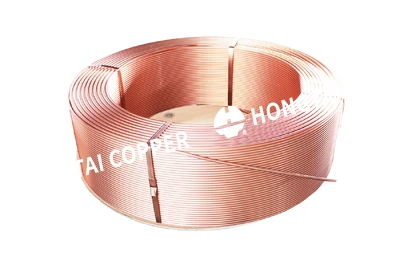
A pancake copper coil is a flat, circularly wound copper tube form commonly chosen for HVAC and refrigeration applications because it is compact, easy to transport, and convenient for field installation or light fabrication work.
When buyers search for pancake copper coil or pancake copper tube, they are usually looking for a product that combines manageable packaging with practical installation value. Pancake coils are especially useful when the user wants flexibility and reduced handling complexity compared with long straight lengths. Their shape makes them efficient to store and ship, while still providing enough length for common air-conditioning and refrigeration connections.
Pancake coils are best suited to projects that value compact packing, manageable coil lengths, and convenient handling. Before ordering, the buyer should confirm outside diameter, wall thickness, coil length or weight, temper, end condition, and whether insulation is required.
Buyers should usually consider pancake coils when they need a relatively compact tube form for refrigeration connections, split-system installation, distribution supply, or moderate-volume manufacturing environments where ease of transport and practical handling matter. The purchasing conversation should include tube size, wall thickness, annealed or hard condition, insulation requirements if any, and the destination market standard.
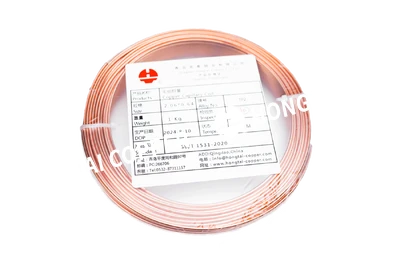
An LWC copper coil is a level-wound copper coil designed for efficient automated or semi-automated processing, making it highly relevant for heat exchanger production, HVAC manufacturing, and large-scale coil feeding systems.
Compared with pancake coils, LWC coils are more closely tied to manufacturing efficiency and continuous production flow. Buyers who search lwc copper coil or lwc copper are often not simply looking for a storage shape. They are looking for a coil format that supports organized unwinding, long production runs, and reduced line interruptions. That is why LWC content should speak to plant managers, procurement engineers, and component manufacturers rather than only to general traders.
Hongtai’s LWC products are intended for buyers whose production process benefits from organized unwinding and longer continuous runs. The order specification should define coil dimensions or weight, tube size, temper, packaging, and the equipment or process in which the coil will be used.
If a factory values uninterrupted feeding, line organization, and output consistency, LWC coils can be a strategic choice. If the project is installation-led and requires smaller, easier-to-handle packages, pancake coils may be more appropriate. Straight tubes remain useful where rigid lengths and direct cutting are preferred.
The best copper tube form depends on whether the project priority is field installation, large-scale manufacturing, storage efficiency, automation compatibility, or transport convenience.
Direct comparison is useful because each tube form has a different operating role. Straight tubes suit rigid-length handling and structured fabrication. Pancake coils suit compact transport and practical installation. LWC coils support continuous processing. Insulated copper lines reduce preparation work at the jobsite when the insulation specification is already known.
| Product Form | Best Use Scenario | Main Buyer Benefit | Typical Buyer Type |
|---|---|---|---|
| Pancake copper coil | HVAC installation, light fabrication, distribution | Compact, easy to transport and handle | Contractor, distributor, installer |
| LWC copper coil | Continuous manufacturing and heat exchanger production | Supports efficient line feeding and output stability | OEM plant, coil manufacturer |
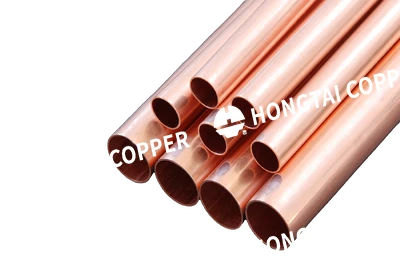
| Straight copper tube | Structured fabrication, direct cut lengths, plumbing and industrial use | Simple length control and rigid handling | Wholesaler, industrial buyer, fabricator |
| Insulated copper line | Ready-to-install air-conditioning connections | Reduced installation steps and better site convenience | HVAC installer, project contractor |
The comparison should be treated as a starting point rather than a substitute for technical review. Working pressure, refrigerant, tube dimensions, joining method, bend radius, installation environment, and local standards may change the final selection.
Evaluating a copper pipe China supplier means checking not only price but also product range, application understanding, standards communication, packaging discipline, and response quality.
Importers evaluating copper pipe china suppliers should compare material and product specifications, manufacturing scope, packing method, quality documents, response time, and export experience. A quotation is easier to evaluate when each supplier answers the same technical and commercial checklist.
A practical supplier evaluation framework includes at least eight checkpoints: material grade confirmation, product form coverage, size range communication, application knowledge, packing method, quality control process, export response speed, and documentation support. A supplier that can answer all eight cleanly is easier to trust than one that offers a very low price but vague technical communication.
Useful evidence includes clear product specifications, photographs of the actual product forms, packing details, certificate examples where available, and direct answers about dimensions, temper, standards, minimum order quantity, and lead time.
Matching tube form to task is the most effective way to reduce waste, avoid ordering mistakes, and improve total project efficiency.
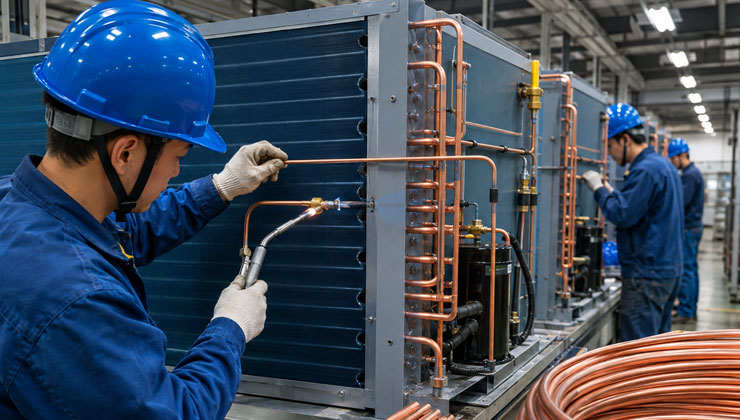
In split air-conditioning installation, a contractor may prioritize ready handling and shorter decision cycles, so pancake coils or insulated line products are often the practical route. In heat exchanger manufacturing, the priority may shift toward process flow, making LWC coils more attractive. In wholesale distribution, the need may be broader, with both coils and straight tubes required to support different buyer segments. In refrigerant line projects, clean handling, correct temper, and packaging reliability may matter more than purely nominal price.
Product form should always be reviewed together with the end-use process. A coil that is convenient to transport may not be the best choice for continuous factory feeding, while a large LWC coil may be unnecessary for a small installation project.
Where possible, buyers should send at least six key data points when asking for a quote: product form, tube size, wall thickness, temper, order quantity, and end-use application. These details make it easier to identify the correct product and reduce repeated clarification.
The most common buying mistakes are choosing by price alone, ignoring form-factor efficiency, failing to confirm standards, and not describing the end use clearly enough in the RFQ.
One frequent mistake is assuming that any coil can replace any other coil. In reality, the shape and winding logic influence how the material performs in production or installation. Another common mistake is to request a quote without enough data, which leads to multiple clarification rounds and slower purchasing decisions. A third mistake is treating “China supplier” searches as if all suppliers are interchangeable, without checking whether the seller’s content actually shows application understanding.
Hongtai can help buyers avoid these mistakes by reviewing the application, tube dimensions, temper, packaging, and required standards before quotation. Clear technical confirmation is more valuable than a price comparison based on incomplete specifications.
Size, temper, and specification questions should be clarified early because they determine whether the chosen copper tube form will perform correctly in production, installation, and shipment.
Even when the buyer has already decided between pancake coil and LWC coil, the order can still go wrong if the specification conversation stays too general. Outside diameter and wall thickness affect system suitability, bend behavior, and cost. Temper affects how the tube behaves in handling and forming. Length, coil weight, or packaging format influences shop-floor efficiency and freight planning. In a practical B2B environment, these are not secondary details. They are the backbone of the RFQ.
A useful selection article should therefore teach buyers to structure their request. At minimum, the RFQ should identify the product form, outside diameter, wall thickness, temper, and quantity. Many successful inquiries also include the final application and the destination market. When the end use is known—such as split AC installation, heat exchanger manufacturing, or insulated line supply—the supplier can often recommend a better route or point out a hidden mismatch before the order is placed.
For Hongtai, adding this type of educational content also improves lead quality. Better-structured inquiries save time for both sides and reduce the chance of confusing apples-to-oranges quotations across multiple suppliers.
Packaging, logistics, and inventory efficiency matter because the wrong product form can increase warehouse handling, shipping costs, and installation delays even if the ex-works price looks competitive.
Procurement teams are under pressure not only to buy correctly but to buy efficiently. Pancake coils are often valued for compact transport and practical jobsite handling. LWC coils can reduce interruptions in large-scale processing environments. Straight tubes may simplify certain storage and cut-to-length workflows. Insulated tubes may reduce on-site preparation time. Each of these benefits has a cost implication that goes beyond the raw tube price.
Good content should teach buyers to think in total cost, not unit price alone. This is especially important in cross-border sourcing, where container utilization, package stability, and unloading convenience can affect the landed economics of an order. A supplier that helps the buyer compare those hidden variables adds real value and becomes easier to trust.
Packaging should also be evaluated against warehouse handling and transport conditions. Coil stability, surface protection, moisture exposure, lifting method, and container loading all affect the condition in which the copper tube reaches the buyer.
The best way to match a product form to a buyer profile is to start from the workflow: installation-led buyers usually prefer practical handling, while manufacturing-led buyers usually prioritize process continuity and line efficiency.
A contractor handling split-system installations may prefer pancake coils or insulated line products because transport and site handling are central concerns. A production plant that feeds material into continuous equipment will often favor LWC coils because line stability is more valuable than manual convenience. A wholesaler serving multiple customer types may need both straight tubes and coils in stock to support different order patterns. By explaining these buyer profiles explicitly, Hongtai can make its product pages and articles much more actionable.
These buyer profiles provide a practical decision rule: installation-led projects generally value compact handling, while manufacturing-led projects generally value continuous feeding and production consistency.
Ultimately, the supplier that helps the buyer choose correctly becomes more than a vendor. It becomes part of the buyer’s decision infrastructure. That is exactly the type of content positioning Hongtai should build in August.
Before finalizing a copper tube order, buyers should confirm whether the selected form is compatible with the processing equipment, installation method, working environment, and required standard.
Important questions include: Can the coil be fed into the existing equipment? Is the temper suitable for bending or flaring? Does the packing protect the tube during export? Are the ends or internal surfaces subject to special cleanliness requirements? Can the supplier provide the requested certificate and inspection information?
Working pressure, refrigerant, and joining method should be considered together because they influence tube dimensions, connection design, installation practice, and inspection requirements.
The tube form alone does not determine suitability. A buyer should identify the refrigerant or fluid, expected operating conditions, and the applicable system design requirements. Wall thickness, tube size, bend radius, and joint preparation may differ between applications. The selected joining process—such as brazing, flaring, or another approved method—also affects the preferred temper and the way the tube is supplied.
For factory production, compatibility with bending, cutting, and feeding equipment should be confirmed. For field installation, the buyer should consider routing space, joint accessibility, insulation, and the number of connections required. Reducing unnecessary joints can simplify installation, but long coils must still be manageable at the jobsite.
Because design codes and local regulations differ, buyers should not rely on a general product description as the sole basis for pressure or refrigerant suitability. The final selection should follow the system designer’s specification and the agreed product standard.
Receiving checks should confirm that the delivered copper tubes match the purchase order in product form, dimensions, temper, quantity, packing, and identification.
Before the material is released to production or installation, the buyer should inspect the outer packaging for damage, check coil or bundle identification, verify the declared size and quantity, and review the available certificate or inspection document. Coils should be checked for deformation, loose winding, or surface damage that could affect feeding or handling. Straight tubes should be checked for bent lengths, damaged ends, and bundle protection.
A consistent receiving procedure helps separate transport damage from manufacturing issues and makes supplier communication more efficient when a discrepancy is found.
Lead time and order planning should account for production scheduling, specification confirmation, packing preparation, inspection documents, and international transport.
Buyers should avoid treating the quoted production time as the entire delivery cycle. Technical approval, label confirmation, packing requirements, booking, customs procedures, and inland delivery can add time. When a project has a fixed installation or production date, the RFQ should state the required arrival date rather than only asking for the shortest lead time.
Early confirmation of dimensions, temper, quantity, and packing reduces the risk of schedule changes after the order has entered production.
For repeat orders, keeping an approved specification sheet and packing reference can shorten confirmation time and reduce differences between shipments.
1. What is a pancake copper coil used for?
It is commonly used in HVAC and refrigeration work where compact transport, convenient installation, and flexible handling are important.
2. What is the difference between pancake copper coil and LWC copper coil?
Pancake coils are usually chosen for convenient handling and installation, while LWC coils are especially useful for organized, continuous feeding in manufacturing processes.
3. Is straight copper tube better than coils?
Not necessarily. Straight tube is better for some fabrication and rigid-length requirements, but coils may be better for installation convenience or continuous processing.
4. How do I choose a copper pipe China supplier?
Check grade clarity, product range, standards knowledge, packaging, documentation support, and response quality rather than comparing price alone.
5. What details should I provide when asking for a quote?
Provide product form, outside diameter, wall thickness, temper, quantity, and end use. These six points allow the supplier to respond more accurately.
6. Can one supplier support pancake coils, LWC coils, and straight tubes together?
Yes, and that is often preferable, because it simplifies communication and gives the buyer more flexibility in matching the product form to each application.
Choosing the right copper tube product affects productivity, logistics, installation speed, and system reliability. Buyers should match pancake coils, LWC coils, straight tubes, or insulated lines to the actual workflow rather than selecting by product name or price alone. Hongtai can review the application, dimensions, temper, quantity, and packing requirement before preparing a quotation.
If you are comparing forms for an HVAC or refrigeration project, Hongtai can help you narrow the choice quickly. Send the application, tube size, wall thickness, temper, and quantity, and ask for the most suitable product recommendation or quotation.